Tuesday, December 23, 2014

Christkindlmarkt in Chicago

Christkindlmarkt komme aus  „traditionelle“ Weinachtsmarkt von Nuremberg (es hat beginnt von 1545). Es ist nicht nur ein Deutscher tradition, es ist ein Chicago tradition auch. Jede Jahr, gehen Leute nach Chicago für das Fest. Es ist eine Feier von Deutscher Tradition in Amerika, und Weinachtstradition.  


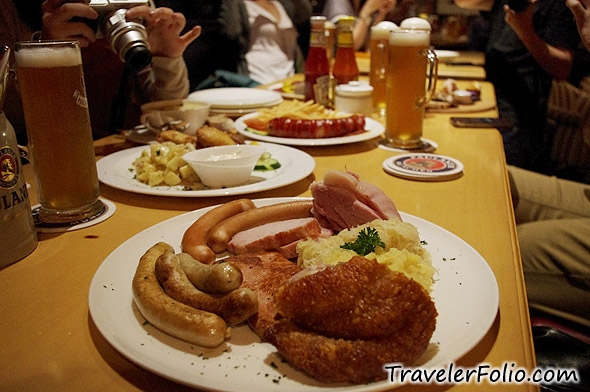
Heute gehe ich mit Katja auf dem Christkindlmarkt.  Est gibt kleine Stände mit Handwerk, das Trinken (Apfelwein, Heiß Shockolade, und bier) und viele Essen—Brezeln, Würsten, Kartoffeln, und suß Strudel. Das Wetter war sehr schon (Es war nicht so kalt!) und mache ich viel Spaß. 

Saturday, December 6, 2014

Arbeits Stress

In unseren Lebens, wir sind sehr angespannt. Jede minute haben wir aufgaben.

In Deutschland, das Unterschieden zwischen das Leben/Freizeit und das Arbeit ist important. Heute, ein Boss schickt Emails and SMS zu das Personal NACH Arbeitszeit, und schnitt Personalzeit in das leben aus. Wegen Teknologie, Man sind verbindet mit sein Arbeit.

Die Deutscher sind nicht glücklich. Es ist nicht gesund! Stress ist nicht gut! In das Arbeitszimmer, es gibt Ausbrehnen und keine Productivität. Es gibt eine neue „Keine-Stress“ vorschlag. Es verbotet Kontact von Boss zu das Personal nach Arbeitszeit.

Aber, wie hat Angela Merkel gesagt? „über alles, wir muss zu die Deuscher Wirschaftszukunft arbeiten.“ 


Es ist sehr typisch in Amerika auch, nein? Sollen wir ein Vorschlag wie das „Keine-Stress“ haben? 

Saturday, November 1, 2014

Die Mauer hat 25 jahre voher gefallen, aber ist Osst und West ganz einig?

Die Berliner Mauer hat fünf und zwansig jahre voher gefallen. Heute, die Mauer verbotet keine, aber die Unterschieden zwischen Osstdeutschland und Westdeutschland sind viel.

1.   1.    Der Arbeitslosigkeit


Der Arbeitslosenquote in alle Duetschland sind sehr tief, aber im Vergliech zu Westdeutschland, Osstdeutschland hat eine hocher Arbeitslosenquote.

2.     2.  Die Jungendlichen


Westdeutschland hat mehr Jungendlichen als Osstdeutschland. Warum? Ich weiss nicht. Ausser dem,  viele Jungendlichen geht nach Westdeutchlandstadten fur die Arbeit.

3.     3.  Die Kinderbetreuung


Kommunistisches Kultur, in 1980s, sagte die Mutter muss arbeiten. So, die Kinder muss in Kiingetreuung, oder Schule bleiben. Heute Osstdeutschland is nicht Kommunist, aber der Kultur ist ein Arbeitskultur. In Westdeutschland, der Kulture war eine Mutter wer arbeitet ist eine „Rabensmutter“ und viele  Muttern bleiben in der Haus fur Kinder. Heute, mehr Muttern in Osstdeutchland arbeitet als Muttern in Westdeutschland.


Die Mauer fiel fünf und zwansig jahre voher, und Duetschland ist offizielle einig, aber heute es gibt kleine Unterschieden in die Kulturn von „Osstdeutschland“ und „Westdeutschland“. 

Anlass: (hier) 

Friday, October 24, 2014

Deutschland: Freie Universität!

Hast du gewusst? Deutshland hat freie Universität!

Letzte Woche, Deutschuniversitäten haben ganze freie geworden. Mann kann aus Universität ohne Schulgeld gehen! Das is phantastich! Die Universitäten sind sehr weitwert und intelligent. Du kannst eine tollen Ausbildung ohne Geld bezahlen haben.


Hier, aus Amerika, Universitäten sind sehr teuer. Sie brauchen mehr Schulgend als Deutschland—40K in eine Jahr! Das ist schwer. Mit eine phantasticher Ausbildung und keine Schulgeld, sind Deustcheruni am besten? Ich weiss nicht. 

Saturday, September 20, 2014

Oktoberfest

Hallo, alles!

September ist fast fertig; Oktober kommt.
In Deutschland, Oktober had ein sehr important Festival: Oktoberfest!

Oktoberfest ist in München, in Bavaria, und jeder Jahr, millionen kommen. Das Festival ist in eine Platz heist Theresienwiese, und es ist am erste Sonntag von Oktober.

Oktoberfest had viele guten essen; Schweinebraten, Steckerlfisch,  Brezen und wursten (Weisswurst, vor allem),  Knödel, Sauerkraut und Blaukraut. Deutschessen ist sehr lecker und München hat die beste Bier--diese Sommer, ein Junge mir sprach die Beste Bier ist Hofbrauhaus in München. 

Es ist eine glücklich zeit for Deutschland!


(Ich habe Hunger...ich wunsche ich wohne in München.) 


Saturday, May 17, 2014

Code Name Verity

There are some books that you like. There are books that you love. There are books that, sometimes, on the rare occasion, you cry over.

And then--once in five blue moons--there's the books that gut you so hard that you can't cry, that you sit facing the wall, rendered completely speechless. The characters still gouge deep in you, and you. Simply. Can't.

This is a WWII book and it isn't. It's a war book and it isn't. It, however, is 100% a friendship story.

Here's a book called Code Name Verity.


Here's the jacket cover summary of the book:

"I have two weeks. You’ll shoot me at the end no matter what I do.

That’s what you do to enemy agents. It’s what we do to enemy agents. But I look at all the dark and twisted roads ahead and cooperation is the easy way out. Possibly the only way out for a girl caught red-handed doing dirty work like mine — and I will do anything, anything, to avoid SS-Hauptsturmführer von Linden interrogating me again.

He has said that I can have as much paper as I need. All I have to do is cough up everything I can remember about the British War Effort. And I’m going to. But the story of how I came to be here starts with my friend Maddie. She is the pilot who flew me into France — an Allied Invasion of Two.

We are a sensational team"


There is a girl. A Scottish spy named Verity, who escaped the night the plane her friend was flying crashed into France. She is caught by the Gestapo. Given a choice: confess everything about the British War Effort, and be given time to write the confession, or be tortured.

She confesses--with the story of how she ended up in the wreckage, the story of Verity and her best friend, the pilot of that plane--Maddie Brodatt.

And what a confession it is. But she's tortured anyway.

What caught me was how beautifully the novel was constructed. The author could have made it dark, depressing, terrifying. She could have emphasized torture and Nazism. And she didn't. Her German interrogators spared her no mercy, but they were far from inhuman, almost comparable to the characters from The Book Thief. But while it spared the reader details, it also managed not to mitigate the darkness of the book. And I have no idea how she did that.

It was also funny. Of course, I'd get asked, "It's a WWII book where a girl gets tortured--how is it funny?" But the main character is Scottish and foul-mouthed, and her Hitler jokes, wrangled into her confession, are simply fabulous. Bonus--I understood every German sentence in that book.

In the end, it wasn't just a WWII story--it was a story of friendship, of a painstakingly-crafted confessions with devastating endings.

Saturday, May 10, 2014

German Updates: Kick-Butt songs

People. People, people.

Today, I have a few awesome songs to share. See, a few days, my German teacher played this one song that basically is playing ON REPEAT on my browser's next tab over.


It's called Pirate, by the German band Kasalla. Basically, these are five awesome dudes from Cologne, singing about....you know, pirates. Could it get any better? 

(Side note: I have the chorus down. Of course, I have close to zero idea what it means--other than "Pirate, wild und frei!"--but I'm blasting it and singing along and trying to stick a Cologne accent down my throat.) 

Which...led me to some other awesome German music. 

A) MORE KASALLA.

Immer Noch Do:


Küm mer lääve:


And after poking around Youtube a little bit, I found another band: Silbermond!

Teil Von Mir:

Here's the thing: I've heard that Germans are quite practical IRL. But when it comes to creativity and art? They're not afraid to let their party animal out. Not to mention that I LOVE their music styles. And though I still don't understand many German songs by lyrics, I still like them. Spanish songs always seemed to be about two things: fiesta, or love (count the times "corazon" is mentioned in a Spanish love song), and I liked them, but I wanted other songs, too. While American songs are dominated by redundant pop songs, German songs are quite refreshing--they're quirky, they're innovative, and they're creative. 

Saturday, April 26, 2014

Southern Y'alls and New York Accents: the German Edition

We know about it here in the States. Down south are the wide Southern accents, the "y'alls" and the wide syllables. I live in Chicago, and a few months ago, at a debate tournament, people from Kentucky commented on my Chicago accent--the narrower words, the nasal tone. There's also the New York accent--the cute curl at the tip of each word, the soft, crisp edges of each sharp syllable.

It's the same in Germany, and in the German-speaking parts of Europe. One from northern Germany may not perfectly understand someone from southern Germany, and someone from east Germany may not understand another from Switzerland.

This video might offer a bit of insight into the different dialects:


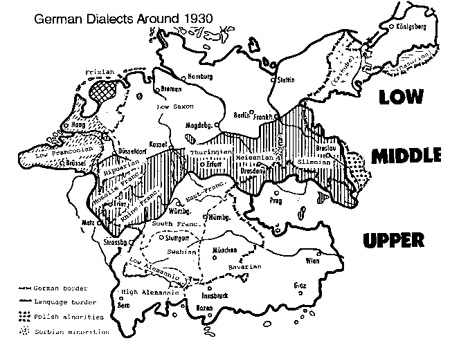
Basically, there are three kinds of German spoken in Germany:
Source: Link

Source: Link

Hochdeutsch: Known as "High German", this is what is generally accepted as the standard German, and the German that is taught to foreigners. It is the language spoken in Southern Germany, around the Alps. Dialects include the Bavarian dialect and parts of the Austrian dialect. S consonants are pronounced like "sch" and Rs are rolled.

Mittledeutsch: Known as "Middle German", this is the dialect that is spoken in central German, around cities like Frankfurt, Cologne, or Dresden.

Niederdeutsch/Plattdeutsch: Known as "Low German", this dialect is usually spoken in northern Germany. (Though Berlin is included, the city is known to speak a form of Hochdeutsch or standard German). S consonants are pronounced like "ss-", instead of "sch-", and Rs may or may not be rolled. "Platt" here refers to the lowlands (which are flat), but I would assume that the dialect here also sounds slightly flatter than Hochdeutsch. Sometimes, the Plattdeutsch dialect has a connotation of being improper, but in most cases it refers to the dialect spoken in Northern Germany.


This interests me-here in the States, usually a Southern accent is noted as being "improper", while the way of speaking in the north is the standard "American English" taught to foreigners. Exactly the opposite of Germany! However, America is not very much known for its diversity of dialects--other than the prominent Southern dialects, the differences between the other American dialects are not quite noticeable. It's almost guaranteed that someone from opposite ends of the country would be able to understand each other perfectly. It also is quite interesting to see how clearly the dialect divides are lined; if only America could be so organized!


Thursday, March 27, 2014

Sometimes I wish I lived in Europe

It's not really a childlike wish as much as it is a contemplative thought.

What is America, you say? Ask any coy European and they have a list to playfully strike you down.

Fat. Cheerful. Overworked burnouts. Rude. Insensitive. Ignorant. Unorganized. Bland.

It's...true. And not.

When I think of culture, I think European before anything else. I think of castles older than my country. I think of sprawling museums with relics of the past, paintings that give a window into what life was long ago. I think impressive architecture, long histories and bloody feuds that sustained between infamous families.

My country doesn't have that kind of feel. America was created to be stripped of bias and tyranny. America is production, not preservation. Individual achievements over community benefit. Making the new, and tossing the old.

Culture? If diversity were a culture...

We are a melting pot. We identify ourselves with nothing that's the same but "American"--and in the loosest sense, it means that our strongest sense of pride is in that one word that our country is named after. That's our strongest link, but by no means a close, communal one.

Europeans have nations, but they also have traditions, and cultures that transcend national barriers. Regional bonds and familial traditions are tighter than any country label they have. Europeans are fond of preservation and history, dedicated to traditions.

Americans don't have an identity; they must make one for themselves.

Yes. Americans can be greedy and materialistic. Americans can be offensive. Americans can be the sweaty, exaggerated, fanny-pack travelers that they Europeans snicker at behind their backs. They may not be graceful explorers.

But keep in mind; next time you see an American huffing and puffing up the narrow stairs to the castletop, or squinting at a Louvre painting, or taking pictures after pictures of the rustic arches of the Roman forum, know that a part of them is trying to seek and capture a beautiful, tangible culture that they long for, but don't have.

Saturday, March 22, 2014

Mozart's Impact

I think there was that Seneca quote that went like, "Life is like a play; it's not the length, but the excellence of acting that matters."

I think that's especially true in the case of Wolfgang Amadeus Mozart.

I don't think this will be an incredibly informative post. It certainly won't be a scholarly analysis of his works, or on specific facts of his life.

Other than this one: he was a brilliant musician. He was a solid genius that managed to pack into his short 35 years of life what others can't attempt  to create in a century.

Mozart's K333 Sonata was the last piece I ever played at a piano competition, you know.

Other people may attempt to pound out his achievements. Because even though I was never good at music competition, I have a good sense for music, and personalities. I want to try to describe the character of Mozart--first, through other composers.

Beethoven (9th symphony) was tempestuous and explosive, Tchaikovsky (Swan Lake & Nutcracker) was illustrious, intricate, and ethereal and Prokofiev (Romeo and Juliet) was ponderous and heavy. Composers were constantly looking to make their "mark"--through a certain music style, or through a manner of composition execution or through their trademark nuances. They wanted a legacy--and being mad genisues, they wanted a dramatic legacy.

Mozart wasn't that.

Mozart is constant, comforting. His music, though not repetitive, certainly creates this straightforward sense of dependability that other music geniuses lack. His pieces have solid, melodies, with perfectly simple, mathematical rhythms that a child could count out. After he gained fame, he didn't succumb to it. He still created the same music he had all his life.

They are not hard to play. But the genius in Mozart's music isn't in the ability to play it. It's in the ability to understand it.

Behind the frills-free sonatas lie an inner musical working that is miraculous and bafflingly straight-laced. Each note has a symbolic meaning; each chord is meant to resonate a certain way.

I loved music, but I hated practicing. I didn't appreciate music until I quit piano a few months ago--and it was then that I realized that all the things my brilliant teacher said--all the meanings behind each embellishment and each --how they contributed to the whole of the creator--the composer.

In the end, Wolfgang Amadeus Mozart let his music speak for himself. In his short life, he still made an enormous legacy for himself.

Try it for yourself. Listen to the composers I listed above, and then listen to Mozart's K333 Sonata. You'll know what I mean.


Chocolate: Belgium vs. Switzerland

Source: http://kitchentalks.com/wp-content/uploads/2011/05/Kitchen-Talks-Swiss-Chocolate.jpg

If there's ONE thing that makes me want to go to central Europe (Germany, Switzerland, Austria, Belgium) more than anything, it's this: the chocolate.

I still remember that time my dad brought a tin of German/Swiss truffles back home. Let's just say that I claimed the box, and it was clean and empty within three days. 

Creamy, was what I thought. It was rich and smooth and velvet that melted on your tongue. There were subtle flavors; hazelnut layering on coffee-hinted dark with just a whiff of vanilla. The outer shells were marvelously crispy, while the insides were heaven to my taste buds. 

(If I'm making you salivate, then I've done my job.)

There's no question; they have the best chocolate in the world.

But what about the best of the best--Belgium and Switzerland? They have quite a chocolate rivalry, but they both boast of proud chocolate histories and special techniques that make the delicious confections taste so spectacular. 

Belgium: 

Taste: Belgian chocolate is known for its quality of the cocoa taste in the chocolate. The flavor is stronger, more brusque, but also more pure. 

Contributions: The Belgians invented the praline in 1912--a man named Jean Neuhaus was credited coming up with the idea that would change the face of the chocolate manufacturing. He would make a chocolate mold (the converteur), and add soft fillings such as cream, nougat, or toffee (there are different flavors--hazelnut is a popular choice.)

Switzerland:  

Taste: Swiss chocolate is known for its smooth, creamy taste--since Switzerland is credited for the invention of milk chocolate, it has perfected the soft texture that melts in your mouth. 

Contributions: The Swiss had many chocolate innovations, but the most important of them came from a man named Daniel Peter. Originally a candle-maker, he switched to chocolate when he was said to have been besotted with the daughter of a chocolate-maker. He began experimenting with chocolate, and eventually ended up with a product known as milk chocolate--something that is so common today that it is unfathomable that the Europeans back then had only dark chocolate to eat. 

Which is better, you ask? 

I don't know, actually. If I ever get to go to Switzerland and Belgium, I will definitely find out for myself. 

But regardless, chocolate is a food that is quite near and dear to my heart, and it's quite cool to learn how two countries dedicate themselves to the innovation of chocolate. To have each person constantly strive to improve the technique of production and the taste--that's what gives European businesses such credibility and uniqueness. Sometimes, when I think of Europe, I think of homey, family-run businesses and individual shops that counter the American mindset of mass-production and major chain industries that, at times, sacrifice identity and quality for convenience. 

Food for thought, isn't it?


Sunday, March 2, 2014

Cuckoo Clocks!

So, thanks to a documentary in my German class, I've discovered a little novelty with German origins.

The cuckoo clock.
Source: http://www.cuckooclocks.com/get-image.aspx?file=1-0260-01-c.jpg
Isn't it so cute?
Short history: The cuckoo clock from the Black Forest--Schwarzwald. The very first (primitive) cuckoo clock was made in around 1630. Eventually, clockmaking became a popular trade among the farmers of the Schwarzwald. When the winters were cold and the farms were covered in snow, what did they do?
Source: http://upload.wikimedia.org/wikipedia/commons/e/e8/Clockmakers_black_forest.jpg

They made clocks. 

These days, cuckoo clocks are made with astonishing details--along with the rhythmic cuckoo chime that sounds off the hours, there can also be waltzing figures, miniature soldiers that move their limbs, and beautiful, intricate design and setting. 

The BEAUTIFUL CLOCKS
Source: http://www.cuckoo-palace.com/cuckoo-clocks-blog/wp-content/uploads/2012/10/Schwer_17.10-225x300.jpg


The inside is no less fascinating than the outside--all the gears, wires and dials fit in this one boxlike structure called the movement, which is the heart of the clock--and the timekeeper. Cuckoo bellows are fit snugly on top of the movement, and are connected by wires and a pendulum that sets the movement in motion. 

Left: a cuckoo clock, and right: the movement
Source: http://public.media.smithsonianmag.com/legacy_blog/early-cuckoo-clock.jpg

Here's an incredibly interesting and informative 5-minute video on cuckoo clockmaking. 


To this day, cuckoo clocks are still a long-standing tradition in the Black Forest. Many of them are still family businesses that create wooden masterpieces that are not only excellent timekeepers, but a marvel and a work of art.

Sources:
http://www.youtube.com/watch?v=57NTH-v2GXU --the video above
http://www.cuckooclockworld.com/history.htm

Monday, February 17, 2014

A Day in the Life: Breakfast in Germany

Traditionally, breakfast in Germany has been a very diverse, hearty meal with many dishes. In today's world, where people opt for a quicker lifestyle, breakfast is more simplistic; however, food is a rich culture in Germany and breakfast is an important meal of the day.

A traditional German breakfast would have:

Bread:

Source: https://encrypted-tbn3.gstatic.com/images?q=tbn:ANd9GcRehHRjXECATya2wi0HEJRvMNB8ideoSGN781kH8WMW1tP3HtEaPA
The German are big on their bread, and it is usually a base staple for their meals. Their bread, cut from loaves or served in rolls, is often bought fresh from a local bakery.

Spreads:
Source: http://www.thewednesdaychef.com/.a/6a00d8341c660253ef017eea4212c4970d-pi
A choice of jam, butter, or a cheese known as quark. 

Beverage:
Source:http://liebesgermany.files.wordpress.com/2013/01/germanbreakfast2.jpg%3Fw%3D637%26h%3D424

Usually coffee or tea is served, sometimes it is a glass of juice, or milk. (note: unlike in America, where coffee is taken in mugs, coffee in Europe is usually taken in teacups, or what I like to tall "espresso cups")

Cold cuts or wurst:
Source: http://stockarch.com/files/13/08/meat_and_cheese.jpg

A German meal just isn't German if it doesn't have its sausage.

Eggs:
Source: http://img.food.com/img/recipes/27/82/30/large/picjABRsr.jpg

So that's it: a delicious, hearty German breakfast! Now, I know that the typical German does not eat such a splendid breakfast like this every day, (just like Americans don't eat pancakes and bacon every day) but it sure would be nice to have a traditional German breakfast like this every once in a while, wouldn't it?

Sources: http://www.germanfoods.org/consumer/facts/eatinghabits.cfm
http://livingingermany.geekymoms.com/2013/05/31/traditional-german-breakfast/

History: the skiing warfare of WWII

So, coming off of the current Winter Olympics excitement and Germany's victory team gold in men's skiing...I thought I might focus on Germany and skiing.

Germany, Austria, and Switzerland have had a long history in skiing. The Alps along their southern border provide one of the world's most prominent skiing bases, and kids often begin skiing while they are very young.

But...did you know that there was such a thing as skiing warfare? 

I didn't.

Dating back to the 1600s, ski warfare has been used in many parts of Europe, from the battle in Polish-Lithuania against Russia in 1605 to the Norwegian-Swedish war of 1814 to WWI Austria to WWII Germany.

Look! The Swedish!
Source: http://www.theskichannel.com/wp-content/uploads/2009/08/20090807_Norwegian_ski_soldiers_606.jpg 
Because many parts of Europe are mountainous, especially central Europe, fighting is not always done on open terrain. In World War II, the US formed the 10th Mountain Division and took to the dangerous terrain of the Alps, where some German troops were situated.

According to a source on npr.org: "The men lived in the mountains for weeks, working in altitudes of up to 13,500 feet, in five to six feet of snow and in temperatures that dropped to 20 degrees below zero at night."

Around that time, "Ski tanks" were developed to access the snowy sites of battle:
Ski tanks
Source: http://www.theskichannel.com/wp-content/uploads/2009/08/20090807_aerosan.jpg


I'll admit, there isn't too much rich historical background behind ski warfare, but the thought of soldiers fighting in skis was quite interesting, and something I had never encountered before:

Sources: http://www.theskichannel.com/news/20090807/guns-blood-skis-the-history-of-ski-warfare/
http://www.npr.org/templates/story/story.php?storyId=14594652

Thursday, January 16, 2014

Little Discoveries

I used to learn Spanish.

The proudest moment of my Spanish-learning endeavor was not getting good grades, or figuring out elusive extra credit questions. It was not the time I got an 100 on a test.

Last year, I went to China over spring break. The best part of it wasn't climbing the Great Wall or visiting the striking palaces or even the food.

It was the moment, on a crowded, busy Beijing street, by a vendor selling fried scorpions on a stick--in a span of five minutes, I spoke three languages at once. I conversed with the vendor and translated for tourists from Spain, and in that moment in time, I switched between the three languages I knew in varying degrees of fluency almost effortlessly.

(I also tried to dissuade the tourists from buying said scorpions on a stick, but sadly, the didn't heed me.)

That was an aha moment for me. I was a little bit sick and weak that day, but I remember emerging from that street, my cheeks glowing. The fact that I COULD use the things that were taught me in class--and in such a natural way--it made me love languages even more.

This fall, even though I switched from Spanish to German, at a park district center, I picked up a copy of a Spanish newspaper--and discovered that I could read it.

That, also, was a groundbreaking moment for me.

As I am learning German, I try to do well in class, but my teacher is also very, very good at combining culture and colloquies with grammar and conjugation. Little by little, I get the full experience of Germany and its culture.

The discoveries have spiked up my life in little ways. Reading a tweet in German and suddenly figuring out that the word "gewinnt" meant "win" in past tense.  Being at a debate tournament and discovering that one of the opponents' last name was Silber--meaning silver in German.

Realizing that German isn't quite the guttural, throaty language I had perceived it to be, but actually something that sounded smooth and sweet and concise.

These little discoveries are my proudest moments.


Saturday, January 11, 2014

The German Pretzel

You know what I'm talking about.

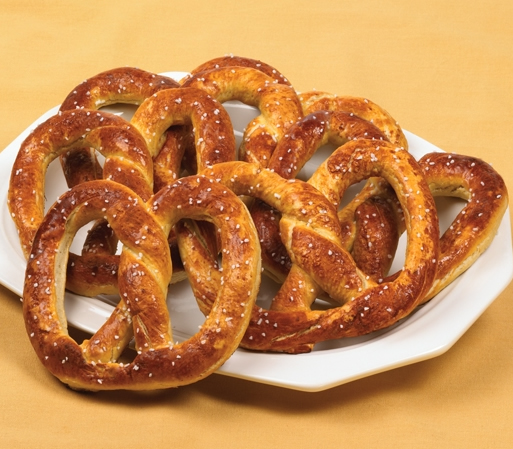
Those big, soft, chewy works of art, twisted into a rolls of doughy goodness.

Source: 


(I'm hungry.)

The German pretzel (Laugenbrezeln) has quite a long history, dating its prominent origins back to maybe the 12th century (some sources say it originated from an Italian monk in the 7th century). By the 17th century, the German pretzel was seen as a sort of religious food, usually consumed during the Lent/Easter time period. The three holes in the pretzel represented the Trinity (father, son, Holy Spirit), and during matrimony, the pretzel was thought to represent union and eternal love (hence the phrase, "tying the knot!")

The pretzel is one of the staple foods of Germany, and throughout many regions of Southern German (such as Bavaria), it can be eaten for breakfast or snack. During Oktoberfet, the pretzel is usually accompanied by fine German beer and weisswurst (white sausage).

It is traditionally made with flour, butter, yeast, and warm water. To give it the distinct crunch, some pretzels are also dipped in lye.

(I'm getting really, really hungry.)

*skips off to make my own pretzels*

Sources:
http://www.theoktoberfest.com/HTML/pretzel/
http://www.foodnetwork.com/recipes/alton-brown/homemade-soft-pretzels-recipe/index.html
http://www.bavarianpretzelfactory.com/history.html


Agnes Obel

I have a weird, incredibly picky music palate. My playlists are often 10-20 songs long, if that. When I like a song, I really, truly love it, and am willing to listen to it all day.

Which leads to the fact that I never really like an artist, only certain songs he/she has to offer.

But.

There has been maybe 3 exceptions to this case. And singer/pianist Agnes Obel is one of them.

This is my favorite song from her, Dorian. 


Agnes is 33 years old, originally from Denmark. But she has been living in Berlin since 2006. She has produced 2 albums, one called Philharmonics, and another newly released album called Aventine. Her works are inspired by Edgar Allen Poe, Alfred Hitchcock, Maurice Ravel, and Erik Satie.

I have just recently discovered her, but she seemed to be a bit of a European sensation, with both her albums hitting number one on the charts of Denmark, Belgium, Norway, and Germany.

Go on and listen. It's perfect for a rainy day.

Sunday, December 1, 2013

Movie: The Book Thief

So on Friday, I saw the movie for The Book Thief.

I read the book in 8th grade. It was part of the reading curriculum. Other than Animal Farm, it was the only book I loved.

The story is set in World War 2 Germany, narrated from the point of view of Death. It follows the story of Liesel, who is adopted by foster parents Hans and Rosa Hubermann and lives and grows up in a socialist world with many internal conflicts.

Hans is a tall gentle man that teaches Liesel to read and plays the accordion. Rosa is a sharp-tongued woman who has a soft heart inside. She swears and curses frequently and often, using the words saukerl and saumensch, meaning "filthy pig", and arschloch, meaning "asshole".

I was so afraid that the movie would underscore the book, because the book was beautiful on its own, and i was sure that the beautiful, witty language could not be transcribed onto screen.

I was wrong. I bawled. The entire time.

It makes me want to cry just thinking about it, because the movie was amazing all on its own.

There was Max Vandenburg, the German Jew that hid in the Hubermanns' basements for a time. Liesel made him want to survive and know what it was like to live, describing simple things such as the weather, or bringing a handful of snow. Max, on the other hand, encouraged her to read and to write and share the stories of her own. He says, (heavily paraphrased"...

"In our religion, we believe that every living thing, every leaf, every creature, every human, has a secret word that gives them life. it is what separates us from that lump of clay...Use it, Liesel. Words are the power we have." 

That is deep.

And then there was Rudy.


Rudy!!!!!

Rudy :'( :'( :( :(


He was the boy Liesel befriended, who played soccer and once painted himself black with charcoal to pretend to be Jesse Owens. He walked with her, he raced with her down the streets, and once, he tried to run away with her, with nothing but a three-piece suit on his back and a soccer ball in a rucksack. The first time he raced her down a snowy street, he bet her a kiss if he won. No spoilers, but I was laughing crying so, so hard in the scenes with Rudy, because he is adorable and impulsive, rebellious and funny.

So many feels.


The scenes that I imagined in my head while reading the book were shot so powerfully. Even in the scenes where there were no words spoken, there was a deep presence of the era, of a war-torn country and the people living in it. It wasn't a country full of brainwashed people--no, no, no. They were desperate, but they were still strong, still loving and stoic. It depicts that time period without judgement, and I was grateful for that.

In the end, there was this old couple in front of us that kissed, and hugged each other, which just...

The tears.

So watch it. Bring tissues.And read the book too, because it truly is one of the great contemporaries of this century.

Sunday, November 10, 2013

And, *drumroll*....A Guest Interview!

So...

During my research about Germany, I stumbled upon quite a few travel blogs. One of them was Ali's Adventures, and she had amusing, quirky, informative posts about living in Germany and her experiences with traveling around the world. One of her posts greatly helped me with deciphering the German trash system, and many other things--Ali just seemed like a cool person all-around.

And...I asked her for an interview.

And she sad YES!

Ali Garland had made it a mission to get to all seven continents before she turned the age of 30, and she succeeded! Nowadays, she lives with her husband, Andy--also a travel addict--in Freiburg, Germany, and they run a travel blog, Ctrl-Alt-Travel, with thousands of views a month. (How COOL is that, seriously!) For anyone who wants to check it out, links are below the interview.

Without further ado...

...
Me: Your stories on your blog sound fantastic. What made you two decide that youwanted to travel, and blog for a living? (Sounds like an awesome job, by the way)

Ali:-- Thanks! We don't really blog for a living. Blogging is fun, and we love to share our stories and encourage others to travel, but for most people, it's really hard to make money from a blog. Andy is a web developer and spent his first 5 1/2 years in Germany working for a company in the city of Freiburg. Now he is a freelancer/contractor, which means he can work short term contracts for different companies and have a little more flexibility with things like time off. Andy decided to move to Germany because he needed a change, and since he studied German in high school and college, Germany was his first choice. I'm currently wading through German bureaucracy to see what my options are for working as a freelance writer. I met Andy (through Twitter!) the summer of 2010 while I was still living in Atlanta. I had always wanted to try living in Europe, so when Andy and I fell in love, we decided it just made sense for me to move. We got married June 2011 and I moved to Germany about a month later. We both love traveling because we enjoy experiencing other cultures and trying other foods. We love having a home, but often we need a change of scenery to get us out of our comfort zone. So now we try to travel for a few months of the year and enjoy being home the rest of the year. 

Questions about Germany:

Me: I heard you two have lived (and have just moved again) into Germany! What was your experience living there? Any culture shock?

Ali: -- Andy has lived in Germany for about 6 years now, and I've been living here a little over 2 years. Our permanent home is in Freiburg, which is in the southwest corner of the country, but we are currently in Berlin for a few months until New Years for Andy's current contract. He certainly dealt with culture shock, but since he's been here awhile, some of those memories have faded a little. My culture shock is a little more fresh though. I didn't speak any German before moving here (I studied Spanish for my foreign language) so it was hard to do even the simplest things. Eventually I enrolled in an intensive integration course, which was about 4 hours of class per day, 5 days a week, for 8 months. It's a lot to learn in such a condensed way, but at least now I can do simple things like go to the grocery store or get my hair cut without needing help.

Me: Any advice for students learning the German language? Or any language in general?

Ali: -- Practice! Finding a native speaker to practice with is key to learning the language. Even better, immerse yourself in a country that speaks that language. My Spanish improved drastically after only a week in Ecuador a few years ago, and there's no way I'd understand even the little bits of German I do without living here. Try not to get hung up on the little details at first, just learn vocabulary and sentence structure. German grammar is difficult for English speakers because it doesn't follow the same patterns. It's more important to focus on learning that rather than getting frustrated trying to learn the gender of every single noun. People will still understand you if you use the feminine instead of the masculine, but structuring the sentence incorrectly could confuse someone.

Me: Every country, every place has this sort of “atmosphere”, this special “feel” that stays with you even when you leave. What do you think Germany’s “atmosphere” is?

Ali: -- Wow, that's a hard one. Germany is very organized and has a reputation for being very efficient. That doesn't mean everything runs as smoothly as you'd think. Rules and procedures that make sense to natives won't always make sense to us foreigners. And if your situation falls within the 5 or 10% that doesn't fit within the norm, it will take a long time to get things figured out. Germany loves rules and paperwork.

Me: Best part about living in Germany? 

Ali: -- I love that there is so much great public transportation. Our apartment in Freiburg is less than 5 minutes from the tram, and the trams get us just about everywhere we want to go, so we don't own a car. I also love that we can hop on a plane or train and be in another country and culture within just a few hours. We live an hour from France and an hour from Switzerland. 


Questions about traveling in general:

Me: How, personally, has traveling changed you? 

Ali: -- Travel has made me a more confident person. I didn't travel outside the US for years because I didn't have any friends who wanted to travel with me, and eventually I decided to stop waiting for someone to join me. I booked a trip to Greece and went by myself, and it was a turning point for me. I realized there wasn't any reason to sit around dreaming about traveling when I could just plan a trip and go instead. I also realized I was a stronger person than I thought. Navigating your way through a foreign country and making it through successfully can do that. 

Me: Even though I’m not an avid traveler, I know there is this moment in the midst of your trip when the sights and atmosphere of the place are surrounding you and you have this brief, disconcerting, enlightening moment and you think, This is what life’s worth living for. Would you like to describe any of those moments? 

Ali: -- Andy and I had a night like that in Lisbon last September. We flew to Portugal for a blogging conference, and we only had one night in Lisbon before we needed to catch a train to Porto the next day. After dinner, we just started walking around to check out the neighborhood. Something about the big open squares with ornate fountains, the smooth cobblestone streets, the smell of the ocean in the breeze, it all just grabbed us. We sat at an outdoor cafe with a drink, soaking up the atmosphere and talking. I can't even put my finger on it exactly, but it's moments like those that remind me of how much I love to travel, to be in different places, and that it's worth some sacrifices to make our life of travel work. 

Me: And lastly, what is your Number 1 advice for traveling? (Other than, “Don’t forget the plug adapter!”)

Ali: -- Number 1 is to just GO! It can be scary, but once you get there, the fear starts to disappear. Don't let your fear make up excuses to stay home. Bad things can happen anywhere, whether you're in your hometown or in a foreign country, so you might as well get out there and see more of the world. Travel slower than you think you need to. It takes more mental (and sometimes physical) energy to be somewhere that's different from what you're used to, so you have to give yourself time to rest and take it all in. Do research before you go but try not to plan too much. Leave yourself room to be flexible and spontaneous. But really, just GO!
....

Thank you so much, Ali! Here's some cool links:

Ali's blog: (http://www.aliadventures.com/)
Andy's blog: (http://www.groundedtraveler.com/)
Ctrl-Alt-Travel (their shared blog): (http://www.ctrl-alt-travel.com/)

I'll keep you guys posted!


Saturday, October 12, 2013

Exploring Castles: Germany Edition!

So, a friend of mine once lived in Germany for about a year or two, and she blogged about it.

She said Germany was really beautiful, and although she didn't know much German, she still enjoyed the place, and...

She lived next door to a castle.

A castle, my friends. That's like saying you live next door to a celebrity or have goats as pets.

But she talked about it in pretty much the most nonchalant way ever, saying, "Oh, yeah, castles are pretty common around here in Germany."

Which led me to a round of Wikipedia-ing. And excessive Google Image-ing.

And...my goodness. For being a country smaller than the state of Texas, Germany has a LOT of beautiful, swoon-worthy castles.

And not only are the castles pretty, the land surrounding them is always the lush blend of hazy mountain peaks on vivid green hilltops, against the expanse of an impossibly blue sky.

...I'm not actually obsessed. Once you see them, you'll understand me.

So, without further ado, here are my top FOUR stunners, not in any particular order (it was a hard choice.)

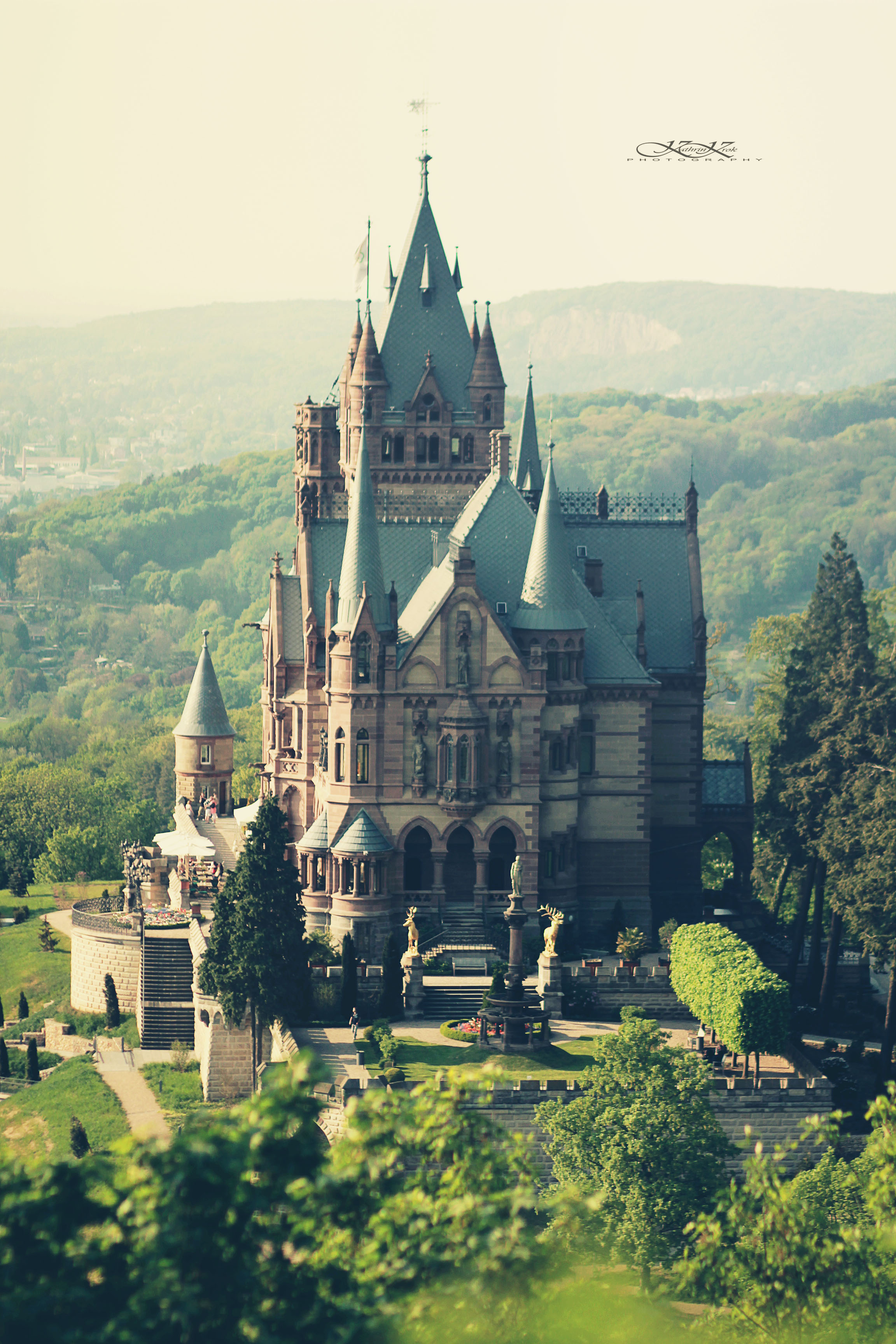
1. Schloss Drachenburg
Look. Just look. And faint a little.
Photo creds: www.deviantart.net

The Schloss Drachenburg (or the "Dragon Palace") is something one would expect to appear out of dreams...or folklore, that is. Legend says that Siegfried, a hero of both German and Norse mythology, slayed his dragon somewhere up in those very mountains of Rhine.Wealthy eccentrics had held parties, a Hitler school was founded there, and it has been everything from a museum to a mini war-zone.

2. Schloss Schwerin
I mean, this castle even has its own island!
Photo creds: Google Images
This little beauty rests in the area of Mecklenburg, in the reserve of parks and lakes. Built between 1845 and 1857, it (and the castle above) were built during the fervor of medieval/historic reverance. Today it serves as an art museum.

3. Burg Hohenzollern
The view. My goodness, the view.
Photo creds: Google Images
This castle has a royal history. It stands as a tribute to the House of Hohenzollern, whose existence dates back to as early as the 13th century. The Prussian king Frederick William IV was a Hohenzollern, and decided to have a castle constructed in their name. Today. it stands as a museum to the great dynasty.

And when it's foggy, this happens:
There is a castle on a cloud.....
Photo credits

4. Schloss Neuschwanstein
I have no words.
Source
There is a reason why they call this Germany's "Fairytale Castle", Surrounded by the soft, blue-ridged mountains of Bavaria, a pure, white beauty against the the lake and the green hillsides--no wonder this was the inspiration for Disney's Sleeping Beauty Castle!

This was built under the instruction of Ludwig II, Duke of Bavaria. It was built for his throne but after two years of power, he had to give in to the Prussians. He eventually receded further and further into his own world of fantasies and fairytales, The castle holds the beautiful remains of what some call a bitter, tragic tale.

And...another one, in the winter:
Look at that! It's like it came straight out of a Christmas book!
Source

Scientific conclusion, after extensive observation: I want my own castle.

...And I'll go sing some more Les Mis now.

And wow, this post was really long.

Which is your guys' favorite? Leave answers below in the comments!


Sources:
http://www.germany.travel/en/leisure-and-recreation/palaces-parks-gardens/neuschwanstein-castle.html